Faizah Sayyid

software engineer innovator life-long learner

About Me

I'm a Toronto-based software engineer with expertise in full-stack development, automation, and scalable system design. Skilled in a wide range of programming languages, frameworks, and cloud technologies, I thrive in collaborative environments where I can build innovative solutions. With a strong foundation in both frontend and backend development, database management, and DevOps tools, I'm passionate about creating seamless user experiences and optimizing workflows. As a lifelong learner, I'm always exploring new technologies to drive efficiency and enhance digital products. While I'm currently based in Toronto, I'm open to relocating for the right opportunity.

Outside of software engineering, I am a hobbyist digital artist, writer, and guitarist! I also stay active through basketball and volleyball.

Contact: faizah.sayyid@gmail.com

Location: Toronto, ON, Canada

Hackathon Projects

SEM:ANTICS

Awards:

Finalist - 4th Place Best Use of Prompt Engineering: Presented by Cohere CGI - Best Leadership Development Game

Tools:

AWS React Express FireBase LLM

An AI-driven tool to improve written communication; create positive impressions & maintain professional relations.

Developed with a team of four in 36 hours for SheHacks 2023, SEM:ANTICS is a comprehensive platform that allows users to edit emails, store their past emails, and gives advice for students, managers, and employees to effectively learn to communicate to a professional standard. It gives tooltip recommendations for each email based on a data-set compiled of positive, negative and neutral habits that are used in their writing. Email writers can continually submit email drafts (receiving multiple pieces of feedback) until they complete a certified professional draft. SEM:ANTICS also records all changes after each draft writing, so after completion, the user can review it at any time and see how they have improved. SEM:ANTICS leverages Cohere's LLM models fine-tuned using a team-compiled database sourced from various professional blogs about professional email etiquette (e.g., Indeed, Glassdoor, University of Toronto).
MemoryLane

Awards:

WISE x WiCS: Breaking the Stereotypes of the Past

Tools:

AWS PostgreSQL React Native Express Python pandas LLM

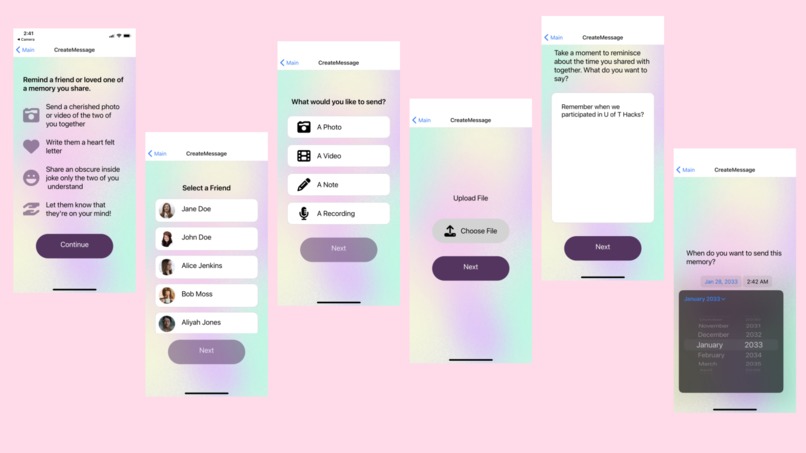
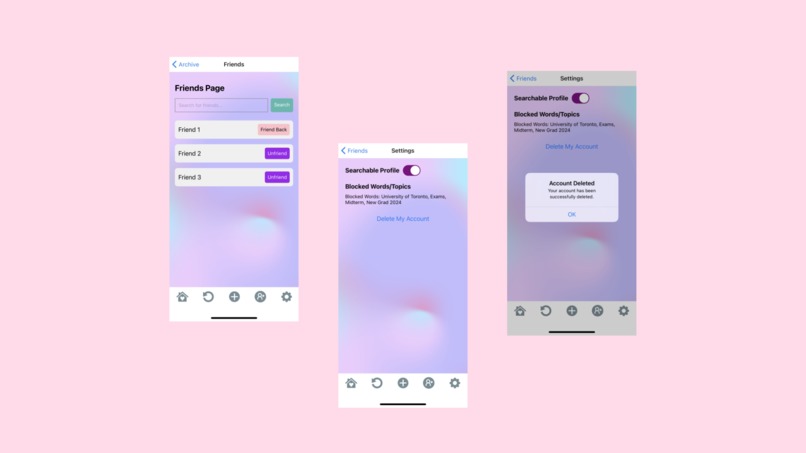
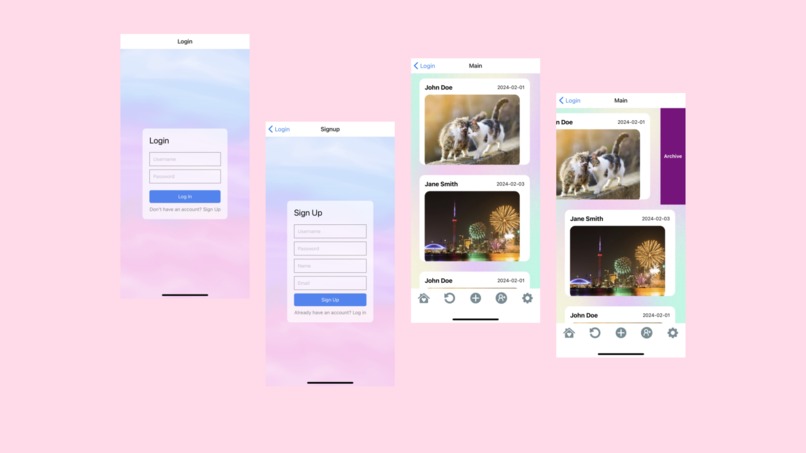
MemoryLane is your private space for exchanging memories through photos, voice notes, videos, and heartfelt messages.

Developed with a team of four in 36 hours for UofTHacks 2024, MemoryLane is a unique and innovative mobile application designed to help users capture and relive their precious moments. Instead of being the one to curate an image for others, with a nostalgic touch, the app provides a personalized space for friends to document and remember shared memories ~ creating a digital journey through their life experiences. Whether it's a cherished photo, an audio clip, a video or a special note, MemoryLane allows users to curate their memories in a visually appealing and organized manner. With its user-friendly interface and customizable features, MemoryLane aims to be a go-to platform for individuals seeking to celebrate, reflect upon, and share the meaningful moments that shape their lives. In this project, we utilized React Native, Express, and leveraged the power of AWS services (S3, AWS-RDS, AWS-SNS, EventBridge Scheduler).

Surgery Central

Awards:

Finalist - 4th Place

Tools:

React Python Jupyter Notebook Google Cloud Google Maps

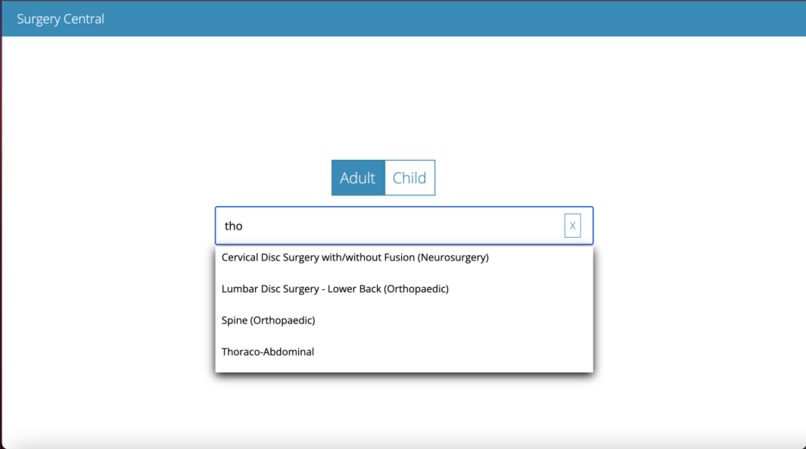
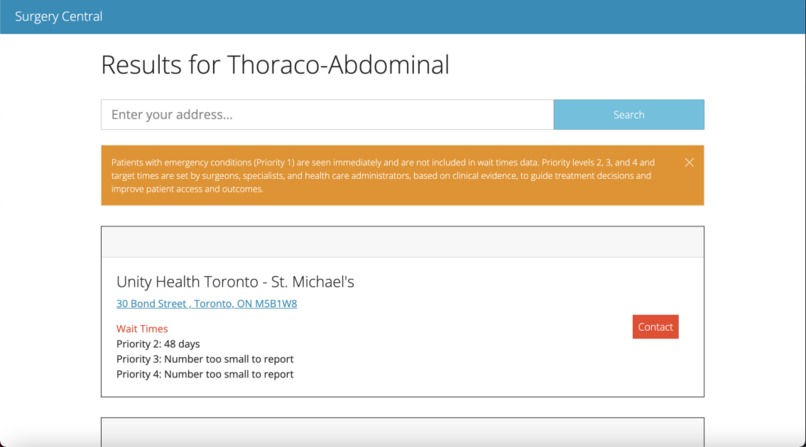
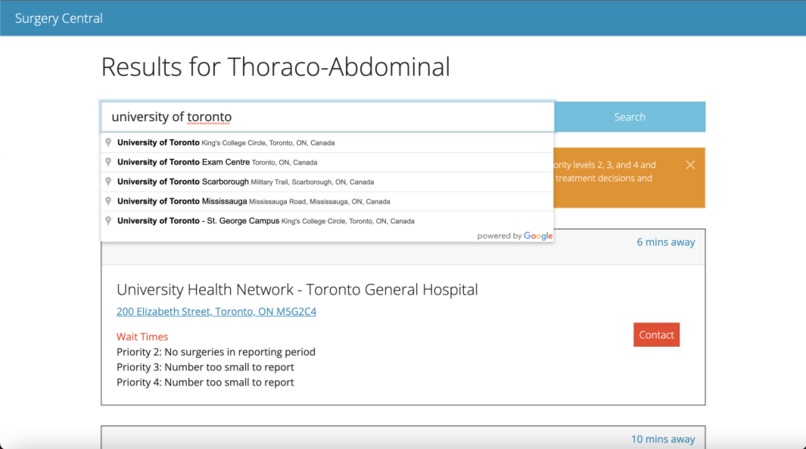
A data centralization dashboard that draws from Ontario Health and (currently) 20+ Toronto Hospitals to display adult and pediatric surgery offerings.

On January 5th 2022, the Ontario government ordered an issue that all non-urgent surgeries were to be paused. Due to the third wave of COVID-19, Ontario is facing another crisis of staffing shortages in hospitals because many of the health-care workers are either infected or are isolated. This marks the third time; on June 13, 2020 and April 8th 2021 a similar order was also issued. With data from 2020, it was after the first wave that Ontario was already 148 364 surgies behind. The data revealing the amount of surgery backlog for Ontario 2021 has yet to be released publicly.

The web infrastructure from the Ontario government is unclear, non-specific and requires users to fill in extra information, visit multiple websites and search for hospital contact information. This project was built to provide a single dashboard that give users all the information they need to access the healthcare they need.

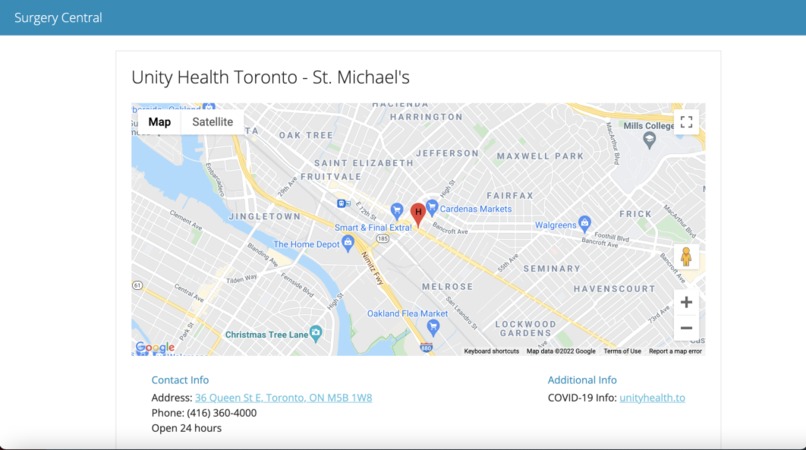
We web scraped Ontario Health and the Toronto Hospital's websites using the following python libraries: selenium, beautiful soup and requests. We then made this data accessible through a user friendly web interface, built using React, which allows users to search hospitals by surgery and view information about wait times. We also utilized the Google Maps API to order the result by distance to the user.

Interviewy

Awards:

Best Use of Assembly AI

Tools:

React Express MongoDB

Interviewy provides jobseekers an AI-driven accessible environment where they can practice their interview skills at any time.

Developed with a team of three in 36 hours for DeltaHacks 2022, Interviewy is an Artificial Intelligence based interface that allows users to practice their interview skills by providing them an analysis of their video recorded interview based on their selected interview question. Users can reflect on their confidence levels and covered topics by selecting a specific time-stamp in their report. An abundance of qualified applicants lose their chance to secure their dream job simply because they are unable to effectively present their knowledge and skills when it comes to the interview. The transformation of interviews into the virtual format due to the Covid-19 pandemic has created many challenges for the applicants, especially students as they have reduced access to in-person resources where they could develop their interview skills. This Interface was built using the MERN stack. In the backend we used the AssemblyAI APIs for monitoring the confidence levels and covered topics.

STDetector

Awards:

Most Innovative Hack Best Health and Wellness Hack

Tools:

React-Native Javascript Airtable

STDetector is a social media platform that decreases the stigma of sharing STI test results with sexual partners.

Developed with a team of three in 36 hours at QWER Hacks 2022, STDetector is mobile app that facilitates the sharing of sexual health information among people. Upon signing up, you can enter your sexual health information and upload pictures of your lab tests as proof. Once that’s locked in, you can search for your partner’s username and start a connection request. Upon accepting your request, you and your partner will exchange sexual health information at a glance. Sexually transmitted infections are very common and costly to a nation’s health and economy. 1 in 5 people in the US have an STI and almost half of new STIs were among youth aged 18-24. Additionally, most STIs have no signs of symptoms. The only way to know is to get tested. Not to mention, once you know your status, you might want to share that information with prospective partners.

Personal Projects

Slime Climb

Tools:

Unity C#

A 2D platformer game made during the University of Toronto Game Design and Development Club (UTGDDC) Fall 2020 Game Jam.

The main character of this tower climbing game is a slime creature who uses its mass to propel themself upward, or to attack enemy ghosts. The main game mechanic revolves around the theme of the game jam, "sacrifice". Players must guide slime dude to the top of the tower in order to win. They can sacrifice parts of their size and mass, in order to jump higher, or to attack enemies. However, if they lose too much mass, the game will end.

My Pokédex

Tools:

React Javascript HTML CSS

A Pokédex web application built with React and the Pokemon API

Some features of this website include, infinite scrolling, dark and light theme, music, and individual pages for each pokemon. I took this as a challenge to replicate the nostalgic feel of scrolling through the Pokédex on the Nintendo DS. All UI elements of this site, other than the Pokémon sprites and settings icon, were made using pure CSS! Including the Pokéballs, the box in which the Pokémon sprites are places, the type tags, etc.

Spotify Community

Tools:

React Express TypeScript MongoDB OAuth Spotify API

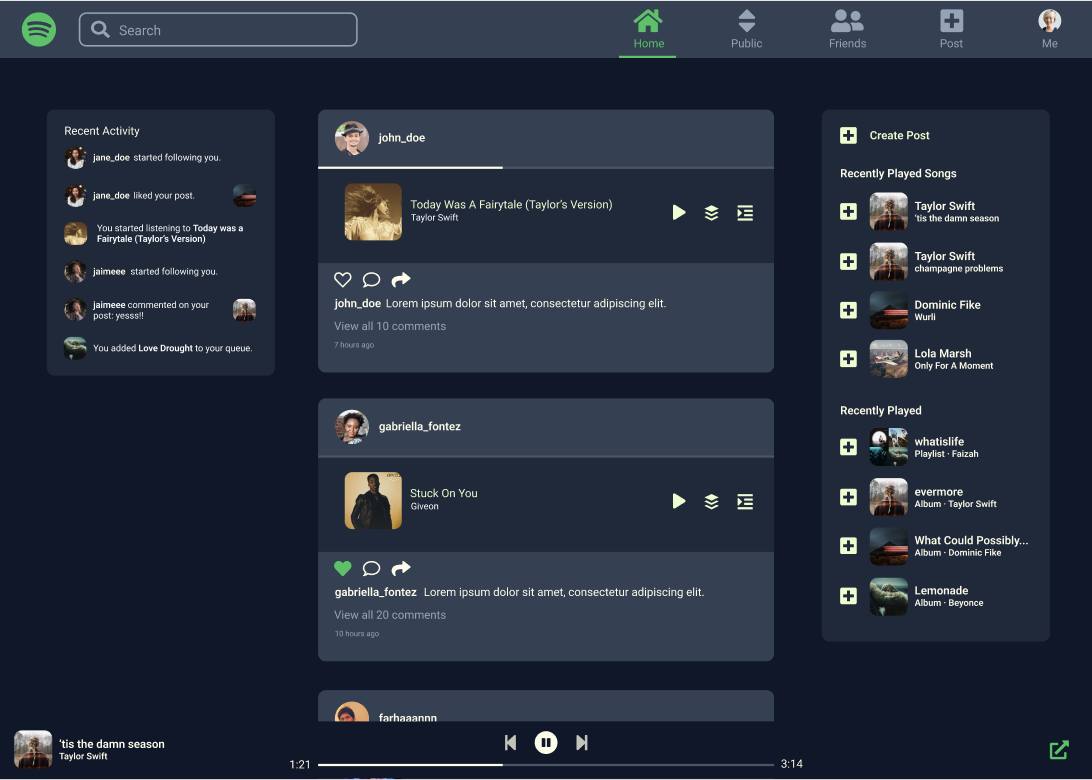
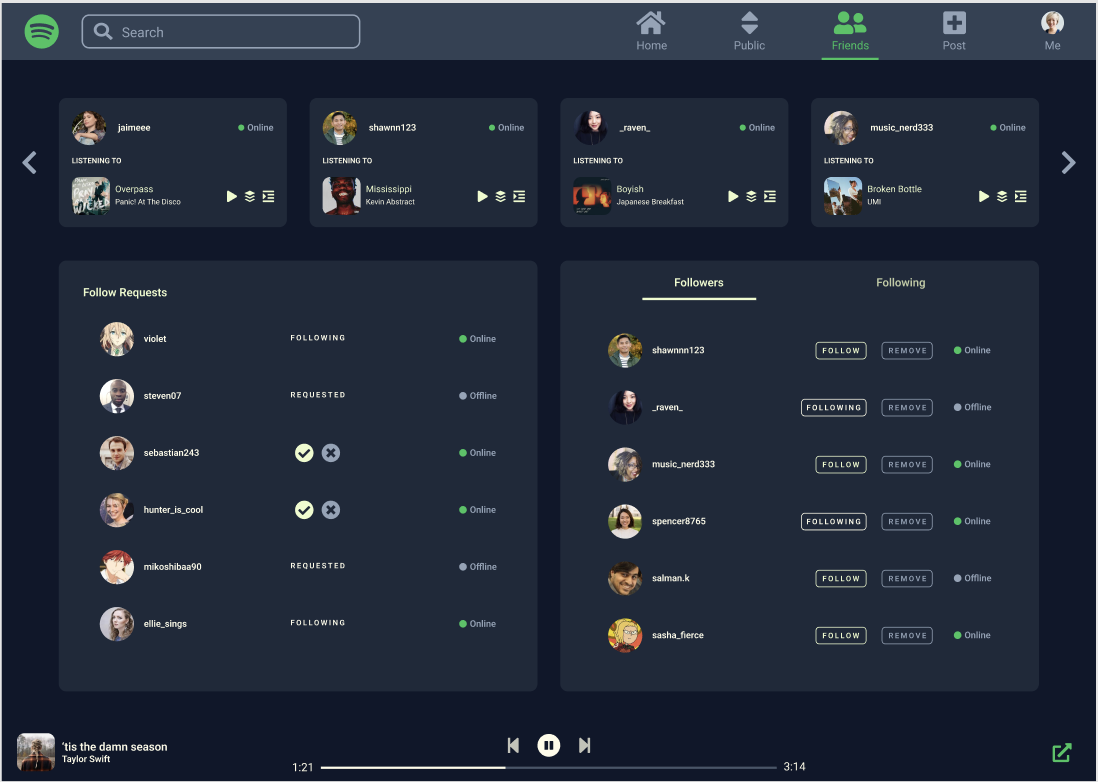
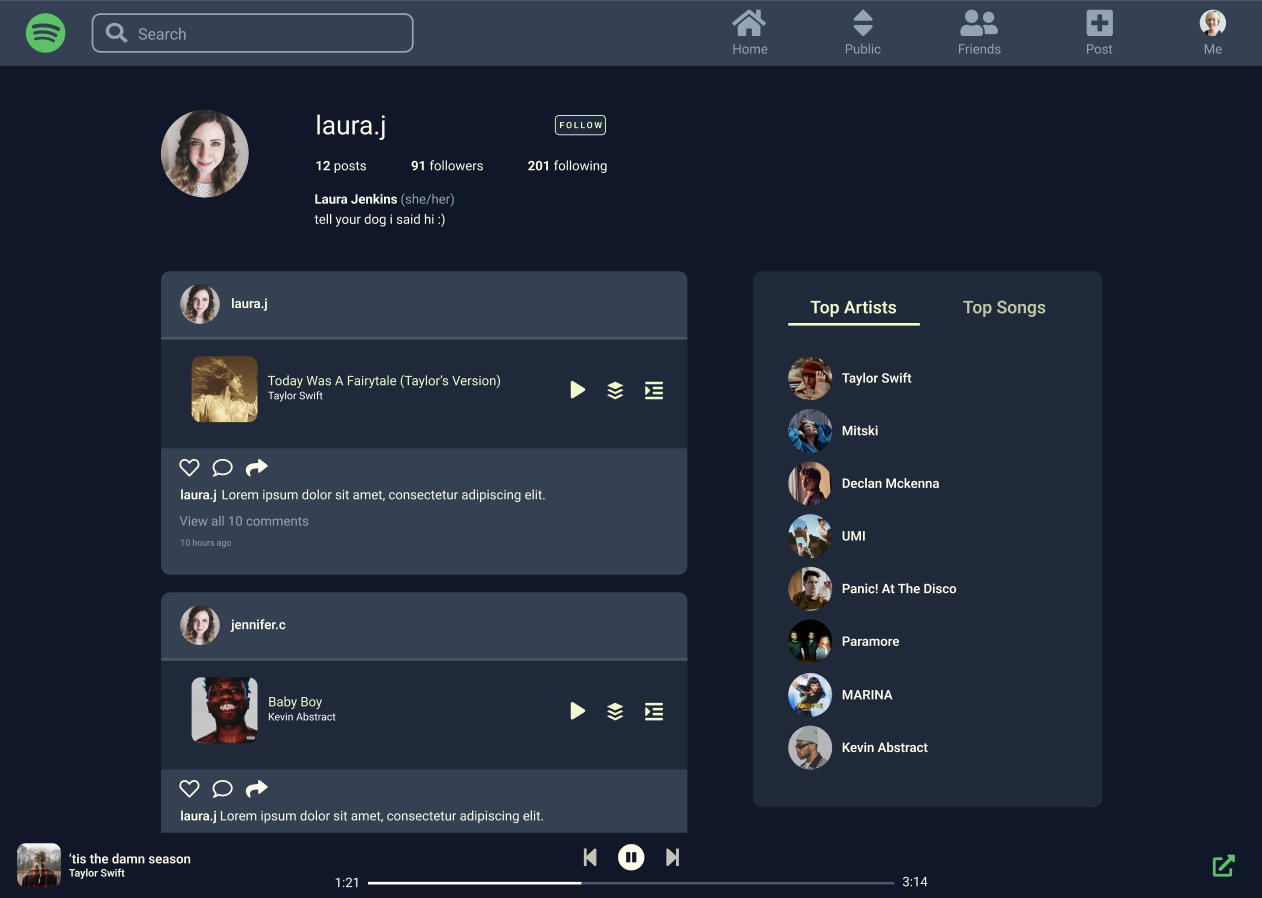
Interact with fellow spotify users by sharing your opinions and feelings about songs, artists, and albums!

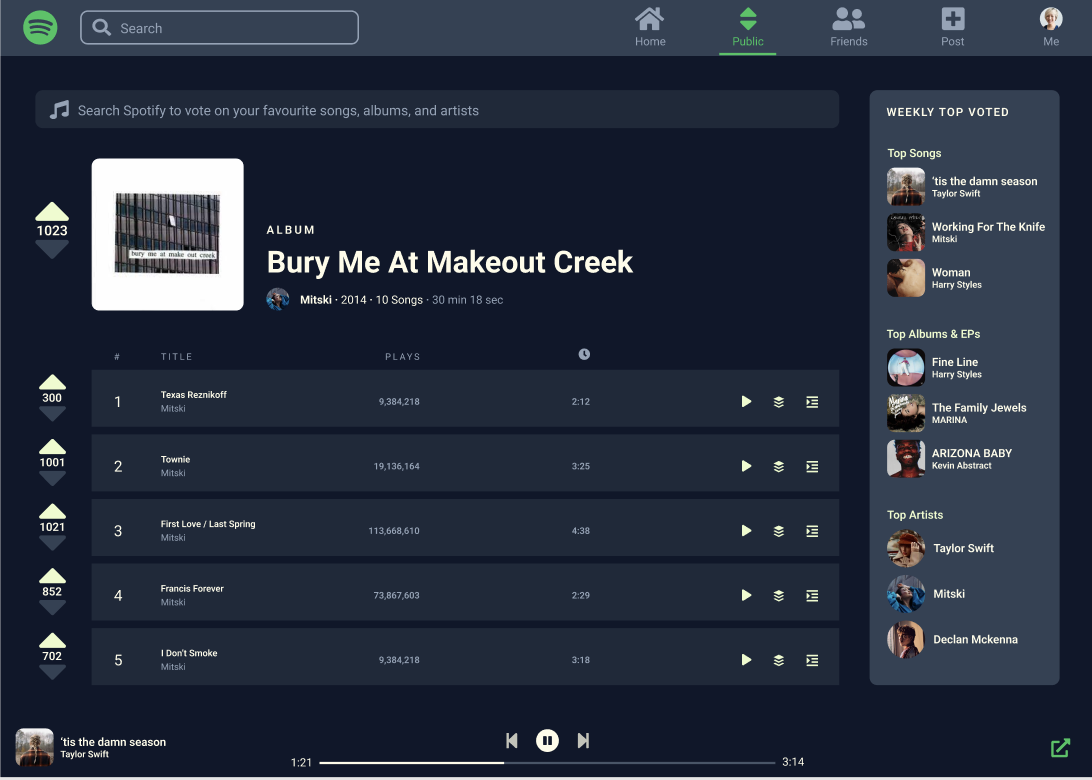
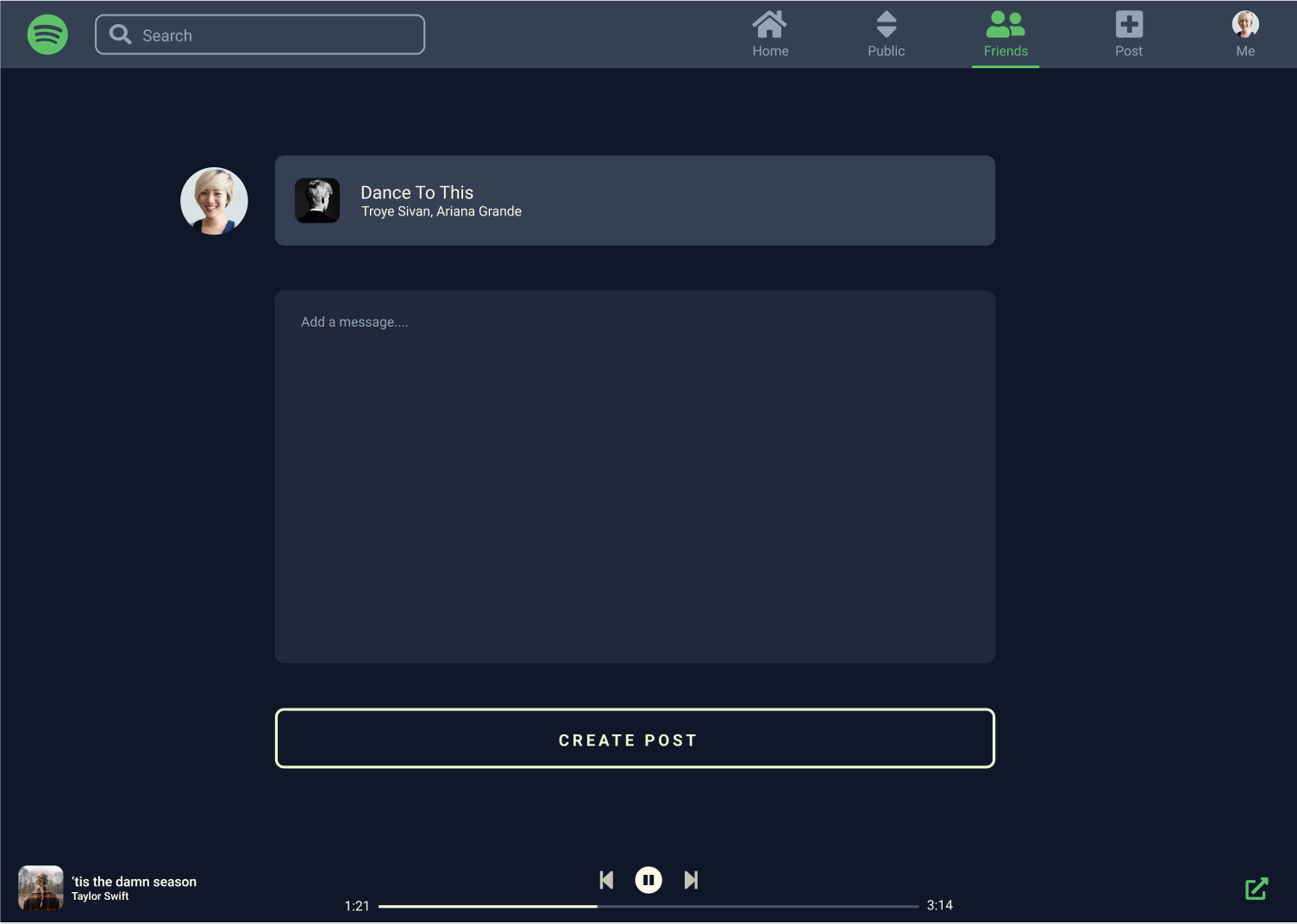
This app is for music lovers and spotify users to build community around the music they love! Some features of this website include: login with Spotify (OAuth), built in music player, create posts, reply to posts, community upvote and downvote, and follow requests.

Onionshop

Tools:

Java Gradle

Onions have layers, and so does this drawing program!

Onionshop, my favourite course project from my time studying at U of T, is a drawing program built from scratch, using Object Oriented Programming and SOLID design principles. Onionshop is an original project developed entirely by me and 5 of my peers at the time.

Drawings can be saved to files with the extension .onion, and reopened later to continue editing. Users can choose between different drawing tools from the toolbar, including pen, eraser, and shape tools. The shape tools include line, rectangle, and circle. When the user selects the Pen, they can press and hold down the left mouse button, this should result in a line appearing on the canvas tracing the path of the mouse movements on the canvas. The Eraser tool works similar to the pen tool, but erases the content at a specified position on the canvas. The Shape tool can draw specific shapes at user specified positions. After selecting the shape, users start creating the shape by clicking the left mouse button on the canvas and adjusting the size and orientation of the shape by holding and dragging the mouse. For every kind of tool, users can select the color and brush size. The canvas could have multiple layers, each layer is essentially a separate drawing that does not affect other layers. But when every layer is visible, they stack together and create the whole drawing. Users can choose between different existing layers, or add new layers. Each layer can be shown or hidden.